Evaluation of Permeable Porous Pavement for Heavy Traffic Loading and Validation of Design Framework Using Full-Scale Testing
Evaluation of Permeable Porous Pavement for Heavy Traffic Loading and Validation of Design Framework Using Full-Scale Testing
Evaluation of Permeable Porous Pavement for Heavy Traffic Loading and Validation of Design Framework Using Full-Scale Testing
Completed: 2025
Funding Agency: NJDOT
Abstract:
Porous asphalt (PA) pavements are widely used as a stormwater management practice because their open-graded structure allows water to infiltrate through the pavement system and reduce surface runoff. Existing guidance, such as the New Jersey Stormwater Best Management Practices Manual, primarily focuses on hydrological design, while structural design considerations for porous asphalt pavements have received limited attention. This study aimed to develop and validate a structural design framework for full-depth porous asphalt pavements suitable for high traffic volume roads under New Jersey conditions.
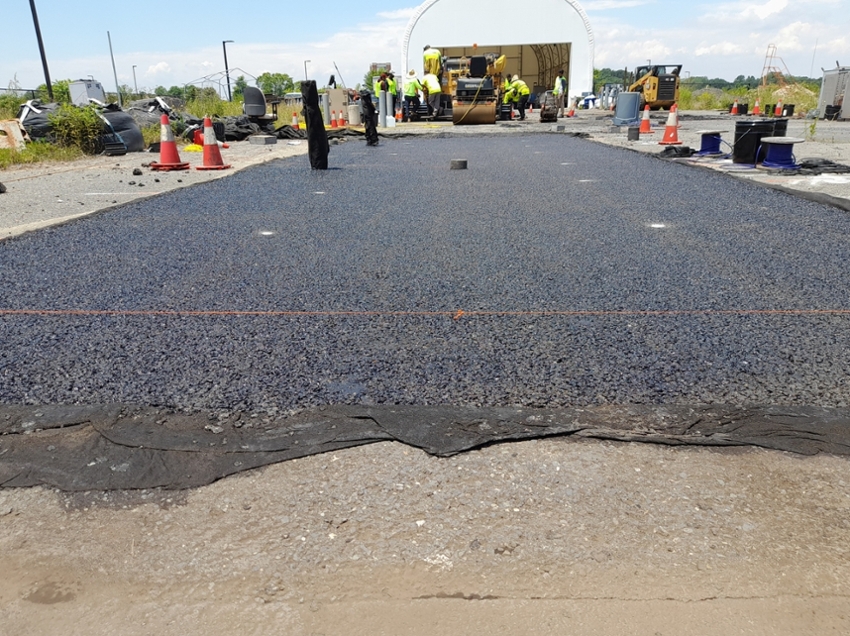
The research was conducted in four phases. Phase I included a literature review, subject matter expert interviews with several state transportation agencies, laboratory evaluation of Modified Open Graded Friction Course (MOGFC) mixtures containing loose cellulose fiber, and assessment of porous asphalt structural design using the AASHTO 1993 pavement design method and the mechanistic-empirical AASHTOWare Pavement ME software. Phase II involved the construction of two full-scale porous asphalt pavement test sections at the Rowan University Accelerated Pavement Testing facility, where sensors were installed to monitor pavement responses during loading. Phase III consisted of accelerated pavement testing using a Heavy Vehicle Simulator to evaluate rutting performance and permeability characteristics and to develop rutting prediction model for porous asphalt pavements. Phase IV included structural evaluation using sensor data analysis and Heavy Weight Deflectometer testing to determine pavement layer properties and estimate the structural contribution of the porous asphalt layer.
The outcomes of this study include validated design and construction guidance, calibrated Pavement ME rutting model coefficients for New Jersey conditions, and a recommended structural layer coefficient for porous asphalt pavements for use in the AASHTO 1993 pavement design method. These findings provide field validated tools for the structural design and evaluation of porous asphalt pavements for roadway applications while maintaining their stormwater management benefits.
Principal Investigators: Dr. Yusuf Mehta, Dr. Ayman Ali, Dr. Abhary Eleyedath
Link to Publications: